

For women

Webinar: Restraining orders and managing post-separation abuse

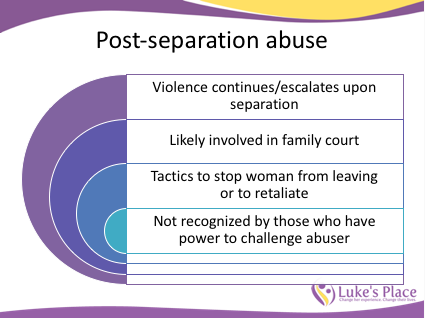
Family violence continues and often escalates post-separation. This webinar explores post-separation abuse and strategies for managing it, including restraining orders and safety planning.
What is a restraining order? How would someone get one? This webinar answers those questions and more.
This webinar is the latest in a series on family law issues when there’s family violence presented by Luke’s Place in partnership with CLEO,

Read more

Differences between religious/cultural family laws and Canadian civil family law

There are significant differences between some cultural or religious family law and the civil family laws in Canada. It is important for women to know about these differences before they make any decisions about how they want to organize their intimate relationships or how they want to resolve the issues that arise when those relationships end.

Collecting evidence of woman abuse for family law cases: Our latest webinar

Evidence about family violence can be challenging to find: often, there are few witnesses, and many women don’t report the abuse to anyone. This webinar provides practical suggestions for how women can collect evidence of the abuse to which they have been subjected as well as tips for frontline workers who are assisting women with this task.

A family law resource for women leaving abuse: Webinar about Family Court & Beyond

Family court can be an overwhelming experience for anyone, but especially for women with children who are leaving an abusive relationship. This webinar introduces Family Court and Beyond: a workbook, organizer and website we have developed to assist women on this journey. Including legal information in plain language,

Family law issues when families change: When to return to family court

Families change over time — kids get older and move out, parents get new jobs, remarry, have more children, lose jobs, want or need to move. Any of these changes could mean a woman or her ex-partner may need to revise an existing family court order, which could involve a return to family court.

How a detailed family court order can lessen post-separation abuse

A good family court order or agreement about the arrangements for the children can facilitate a workable relationship between a woman and her ex-partner and lessen opportunities for post-separation abuse. The more details that are set out with precision in the order, the less room for misinterpretation, misunderstanding or manipulation,

Managing post-separation abuse

Unfortunately, many abusers are not yet ready to give up their power and control after the couple separates so the abuse continues. This is often referred to as post-separation abuse. Women may have to deal with ongoing issues for months or even years after their formal family law case is over,

Family law information: Luke’s Place & CLEO webinars

Visit our more up-to-date list of webinars
Luke’s Place partners with CLEO to deliver family law information webinars on issues faced by women who have been subjected to violence in their relationship. The webinars are pre-recorded and will be posted to this website and CLEOConnect.ca the afternoon of the date listed.

Alienating children or protecting them?

In the late 1980s, a new phrase started to pop up in American and then Canadian family courts: parental alienation syndrome (PAS). Originally coined by American psychiatrist Richard Gardner, the term was used to describe situations where one parent intentionally interfered with the children’s relationships with the other. (It might be more accurate to say that it described situations where one parent claimed the other parent was doing this.)
Gardner’s research was highly problematic for many reasons;

Mediation: You can’t always get what you want

“But if you try sometime you find/You get what you need.”
Many women leaving abusive relationships would take exception to even the modest optimism expressed by the Rolling Stones in this 1969 hit. Nonetheless, this is very much the tone of family court these days, in particular mediation.
When I began practicing law in the mid-1990s,