


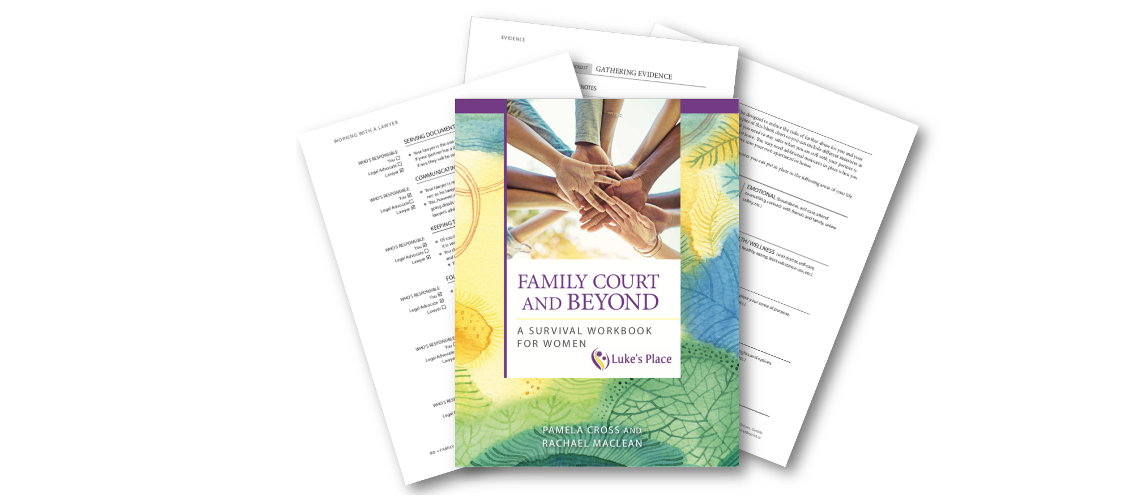
For women

What do I need to do if I want to move?

The Divorce Act and Children’s Law Reform Act are the laws that govern relocating. They contain very specific rules for what parents need to do if they want to move, either with or without their children.

Read more

How can I support my clients who have remote court appearances?

If supporting women as they prepare for and attend court is an important part of your job, here are some suggestions to assist you help them prepare for and attend virtual/remote court proceedings.

Ahead of time

Assist your client find out how her court appearance is going to take place. Will it be by telephone or videoconference?

Peace bonds: You can now apply remotely

Anyone wishing to apply for a peace bond can now do so online.

Six common mistakes to avoid when completing financial statements

This is a brief summary of a paper prepared by Robert Shawyer and Andrew Sudano for the Law Society of Ontario‘s The Six-Minute Family Law Lawyer. Their paper was titled, “An Ounce of Prevention is Worth a Pound of Cure: The Six Most Common Mistakes When Drafting Financial Statements And How to Avoid Them.”

Don’t ignore the proposed budget section

The first common mistake is ignoring the proposed budget section at the end of the financial statement.

Important update on LAO eligibility for abuse survivors

Legal Aid Ontario has announced that, effective May 2nd, it is no longer waiving financial and legal eligibility criteria for survivors of family violence.

Please see the link below for detailed information about current LAO eligibility:
https://www.legalaid.on.ca/services/domestic-abuse/

Court notice finder: Up-to-date information about family court

A new website, Court Notice Finder, put together by a number of Ontario family law legal professionals, organizes the:

“voluminous – and often changing – information found in the various Court Notices issued on behalf of Family Law courthouses across Ontario since the beginning of the COVID-19 pandemic.”

This is a very useful tool for anyone who wants to be sure they have the most up-to-date information about how the family court in their region is operating.

Video conferencing safety and other tech considerations during family law processes

There are different tech safety issues for women to consider depending on whether they are going to court, using mediation or attempting to resolve their issues through negotiation, either by themselves or with the assistance of a lawyer.

Family courts are increasingly moving to remote hearings and online document filing. This means that a woman whose partner is engaging in legal bullying,

Webinar: Making the new Divorce Act work for women

The new Divorce Act is effective, March 1, 2021. This webinar looks at how to make the new act work for women who are leaving an abusive relationship.

Staying in the family home after separating from an abusive partner

If you are married to your ex-partner, the home the two of you shared is called the matrimonial home. The law says you each have an equal right to occupy that home, regardless of whose name is on the deed or the lease unless you have a court order or a legal agreement saying otherwise.

Just how much financial information does a woman have to share when she leaves an abusive partner?

Financial abuse

Many abusive relationships involve an element of financial control or abuse. For example, the abuser may:

Monitor the woman’s spendingControl all the money and give her an allowanceRequire her to justify her spendingInsist that only his name be on bank accounts, investments, credit cards, etc.Not allow the woman to have a debit cardMake all the financial decisions for the familyOwn all the property

Full financial disclosure

Upon separation,