



Recognizing the National Day of Remembrance and Action on Violence Against Women
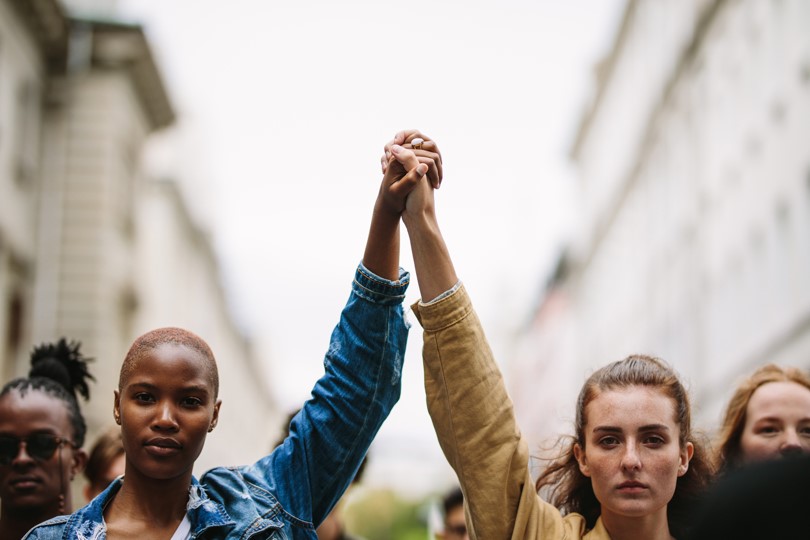
On this day 33 years ago, 14 women were murdered and 10 others were injured at the Universite de Montreal’s École Polytechnique in a devastating act of violence fueled by misogyny. These women were killed for no other reason than the fact that they were women. To honour these women, December 6th is recognized as The National Day of Remembrance and Action on Violence Against Women. The goal of this day is to remember this tragic event, renew our commitment to preventing similar events from happening in the future and reflect on our progress when it comes to ending violence against women, girls and gender-diverse individuals in Canada.
We wish we were at a place where our reflections on this day were replete with optimism about the work being done to address and prevent gender-based violence (GBV). But what we know from the headlines and annual crime statistics is that this violence is still happening at an alarming rate. The following are only some of the headlines we have seen over the past few weeks:
- “Woman dead after stabbing in Milton home, man arrested” November 22, 2022, CBC news[1];
- “Man charged with first-degree murder in missing woman’s death” October 7, 2022, The London Free Press[2];
- “Girl, 8, and father found dead in Oshawa home after apparent murder-suicide, police say” November 14, 2022, CBC news[3];
- “Husband facing murder charge after woman found on Etobicoke roadside dies of injuries: Toronto police” November 7, 2022, CP24[4];
- “Man on trial for murder of estranged wife with machete” November 16, 2022, Global News[5].
The formal statistics continue to paint a grim picture when it comes to the reality of GBV in Canada:
- A woman or girl is killed approximately every 2.5 days[6].
- A woman is killed by her partner or former partner approximately every 6 days[7].
- Indigenous women are 6 times more likely to be killed than non-Indigenous women[8].
- Rates of police-reported family violence increased for the 5th consecutive year, with the rates of this violence more than two times higher for women and girls[9].
- Women and girls are more than 3.5 times more likely to be victims of police-reported intimate partner violence than men[10].
- This past year, there were 52 femicides in 52 weeks in Ontario[11].
The above only scratches the surface when it comes to rates of violence against women in Ontario and Canada. Statistics are based on the violence that is reported to the police, yet we know that much of this violence goes unreported.
We also know that rates of GBV are disproportionately higher for women in marginalized communities. For instance, Indigenous women and girls continue to face high rates of violence[12] and femicide occurs at a disproportionate rate among Indigenous, Black and Racialized women[13].
The onset of the pandemic hasn’t helped our path forward when it comes to addressing GBV in Canada. Instead, it has made the problem worse by trapping women in homes with abusers, restricting access to protective court orders and limiting available supports and resources in the community. As noted by OAITH in its report on femicides in 2020-2021, the pandemic exacerbated existing systemic barriers that contribute to GBV, such as poverty, housing instability and wage inequality, and, like other natural disasters, these negative effects may be felt by survivors of GBV for a long time to come[14].
If we want our reflections on this day to be filled with hope instead of regret, we need to continue holding our law and policy makers accountable for taking proactive steps towards systemic change. One way to do that is through ongoing joint advocacy efforts by survivors, community organizations, experts, advocates and front-line service providers. A number of these groups came together in 2021 to create a Roadmap for a 10-year National Action Plan (NAP) to end GBV that included 100 recommendations. Nearly two years later, the federal, provincial and territorial governments just announced a Framework for a NAP. This Framework, while a step in the right direction, is not a full NAP ready for immediate implementation. A number of VAW organizations, including Luke’s Place, prepared a joint statement about the newly announced Framework, which can be found here. Our organization will continue to advocate for the implementation of a NAP that takes into account all 100 recommendations from the Roadmap.
We will also continue to advocate for the implementation of the 86 recommendations stemming from the recent Inquest into the triple femicide that took place in Renfrew County in 2015[15]. This three-week long Inquest took place in June 2022 to investigate the deaths of Carol Culleton, Anastasia Kuzyk and Nathalie Warmerdam, who were all murdered by the same man on September 22, 2015. A jury of 5 people returned a verdict and made a number of important and impactful recommendations for change to prevent this kind of violence from occurring in the future, one of which calls for intimate partner violence to be declared an epidemic. These recommendations are at risk of being forgotten and ignored unless we proactively push them forward and ensure all relevant levels of government are held accountable in terms of implementation[16].
Today, we remember and mourn the loss of all 14 women who were murdered on this day in 1989 and recommit to end violence against women in the future. We hope you will join us in this fight.
If you or someone you know has been subjected to violence and need support, please find a map of various community organizations across Ontario here. If you are specifically looking for family law support, we encourage you to contact us at 1-866-516-3116 ext. 235, or email us at intake@lukesplace.ca.
References
[1] https://www.cbc.ca/news/canada/toronto/woman-dead-stabbing-milton-1.6661018
[2] https://lfpress.com/news/local-news/man-charged-with-first-degree-murder-in-womans-death
[3] https://www.cbc.ca/news/canada/toronto/ont-oshawa-murder-suicide-1.6651648
[4] https://www.cp24.com/news/husband-facing-murder-charge-after-woman-found-on-etobicoke-roadside-dies-of-injuries-toronto-police-1.6142729
[5] https://globalnews.ca/news/9284114/man-on-trial-murder-estranged-wife-machete/
[6] https://nationalactionplan.ca/
[7] https://www150.statcan.gc.ca/n1/en/pub/85-002-x/2019001/article/00016-eng.pdf?st=BUkWyqtT
[8] https://nationalactionplan.ca/
[9] https://www150.statcan.gc.ca/n1/daily-quotidien/221019/dq221019c-eng.htm
[10] https://women-gender-equality.canada.ca/en/gender-based-violence-knowledge-centre/intimate-partner-violence.html
[11] https://www.oaith.ca/assets/library/2021-2022-Annual-Femicide-List-Press-Release.pdf
[12] National Inquiry into Missing and Murdered Indigenous Women and Girls, “Reclaiming Power and Place: The Final Report of the National Inquiry into Missing and Murdered Indigenous Women and Girls.”(2019)
[13] https://www.oaith.ca/assets/library/Taking-Count-And-Taking-Action-2020-2021-Femicide-In-Ontario-Report.pdf
[14] Ibid at 13.
[15] https://lukesplace.turnbull.co/86-recommendations-for-change-from-the-renfrew-county-inquest/
[16] Luke’s Place created an Advocacy Toolkit for other organizations to use when advocating for the implementation of recommendations from the CKW inquest